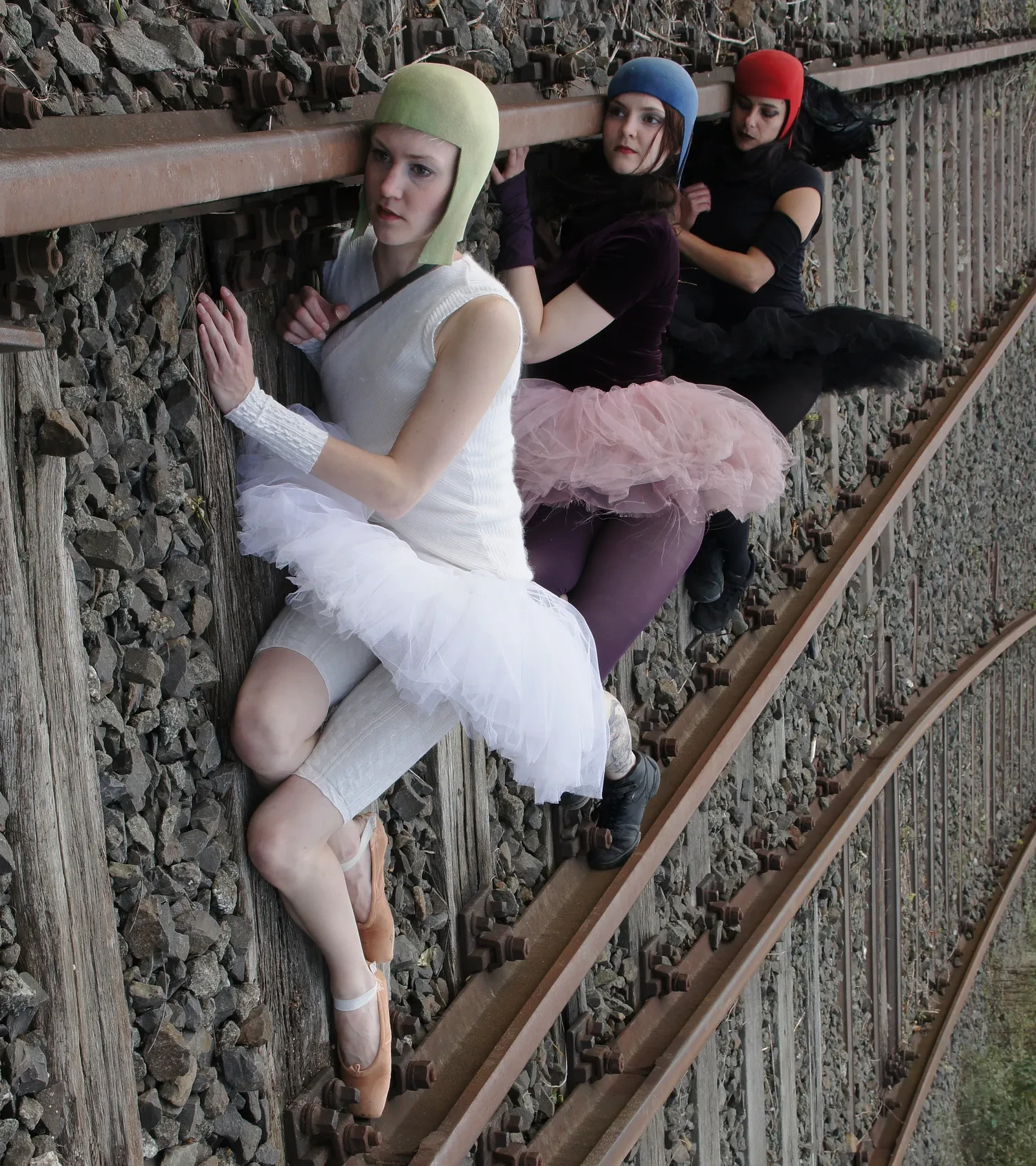
poetic reading
The history of techniques for predicting the future is as old as the idea of the future itself. There is something melancholic in listening into the rails. What may come feels unstoppable. My own strength is nowhere near enough to halt the momentum that is only now announcing itself in a faint whisper. To pull away seems prudent And yet, should I lift my ear from the rail, the connection will break The warning would fall silent.
Objective description
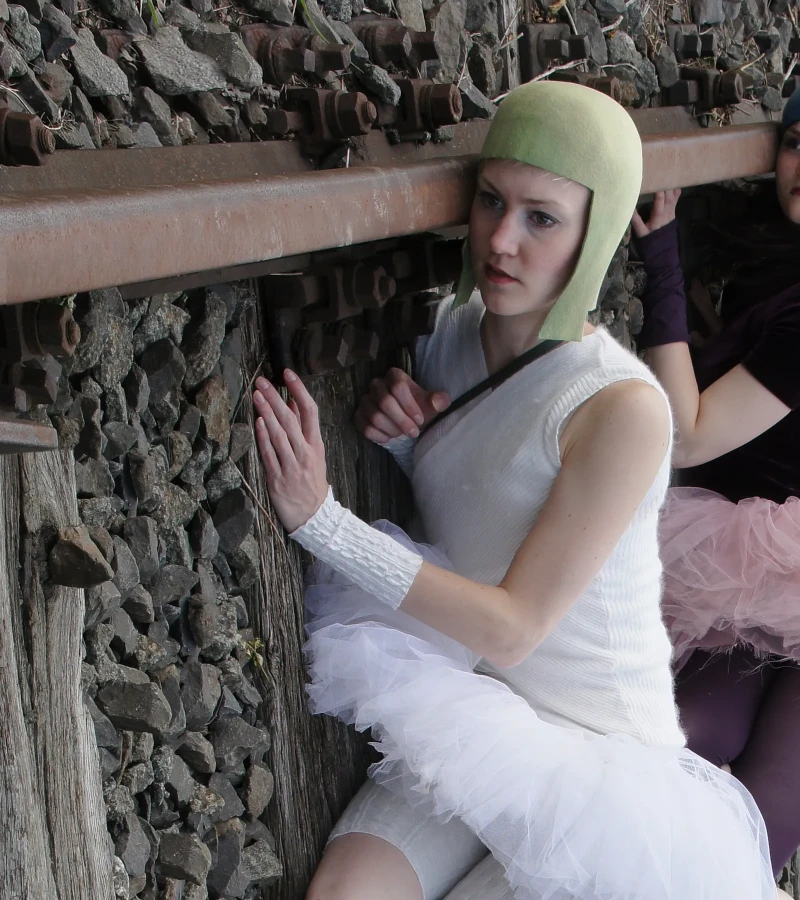
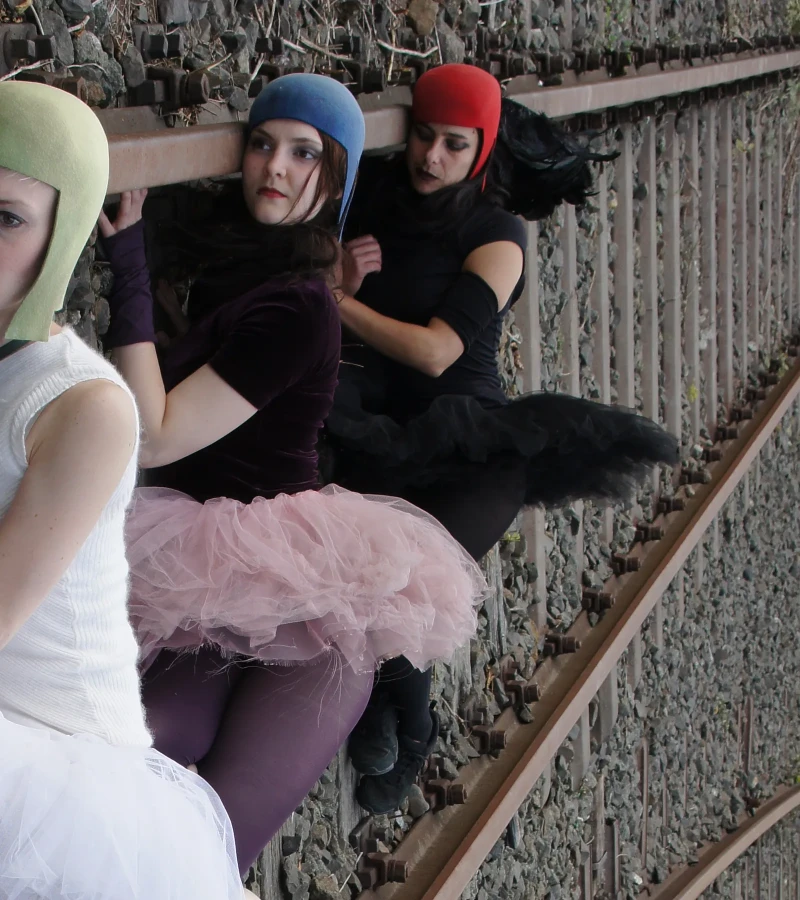
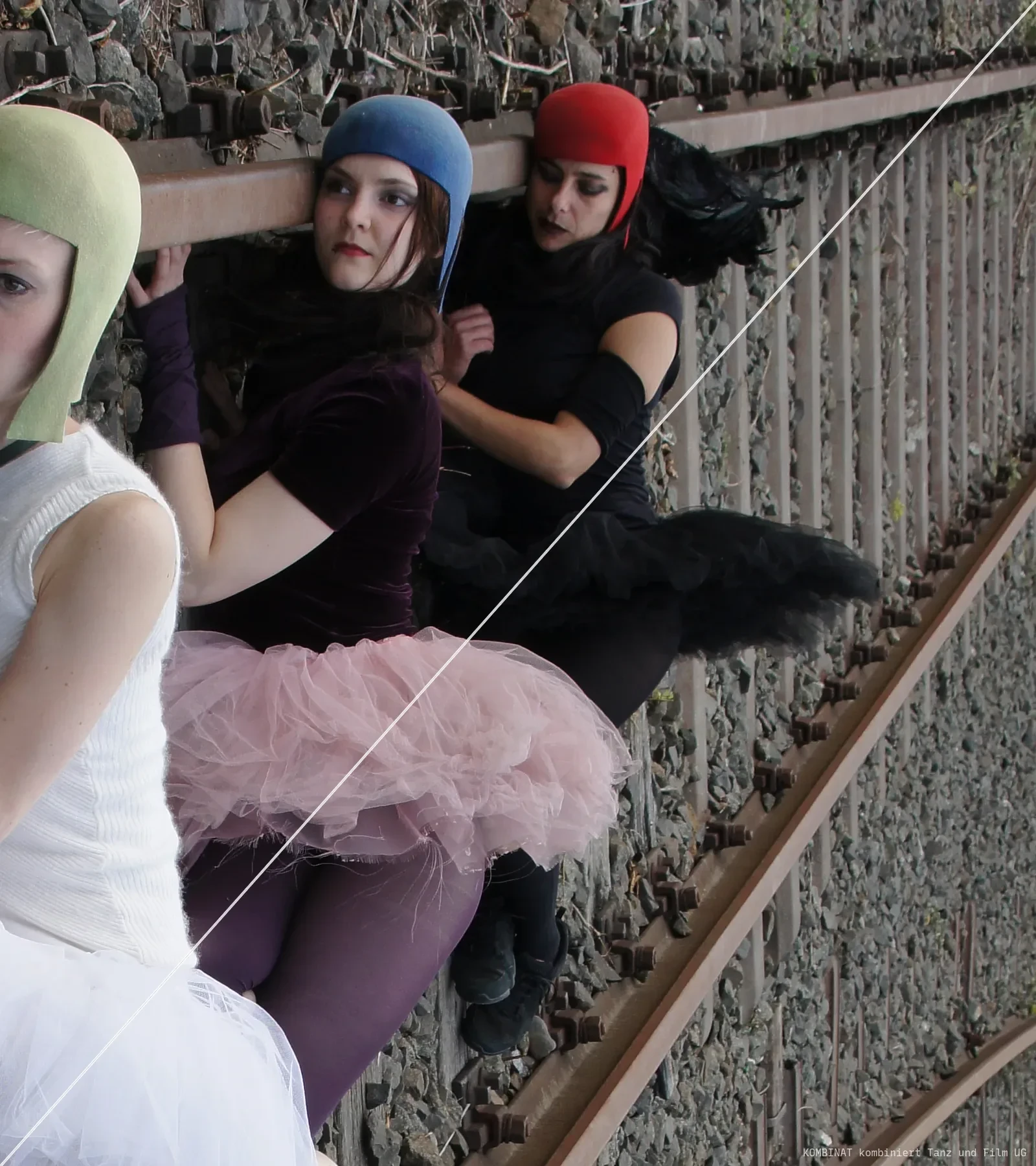
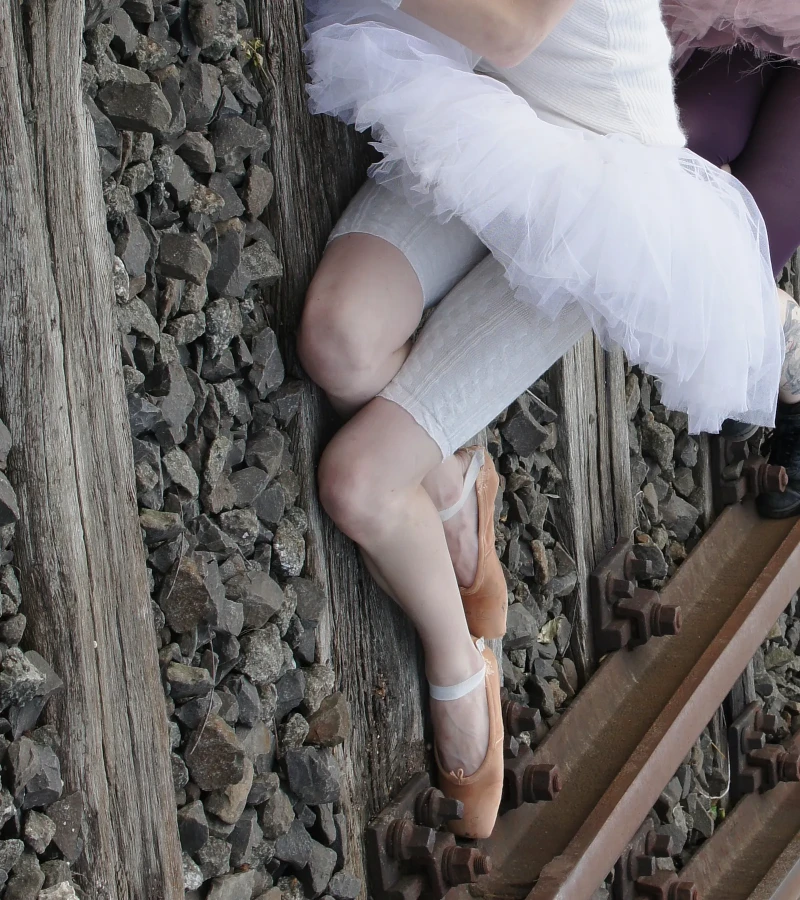
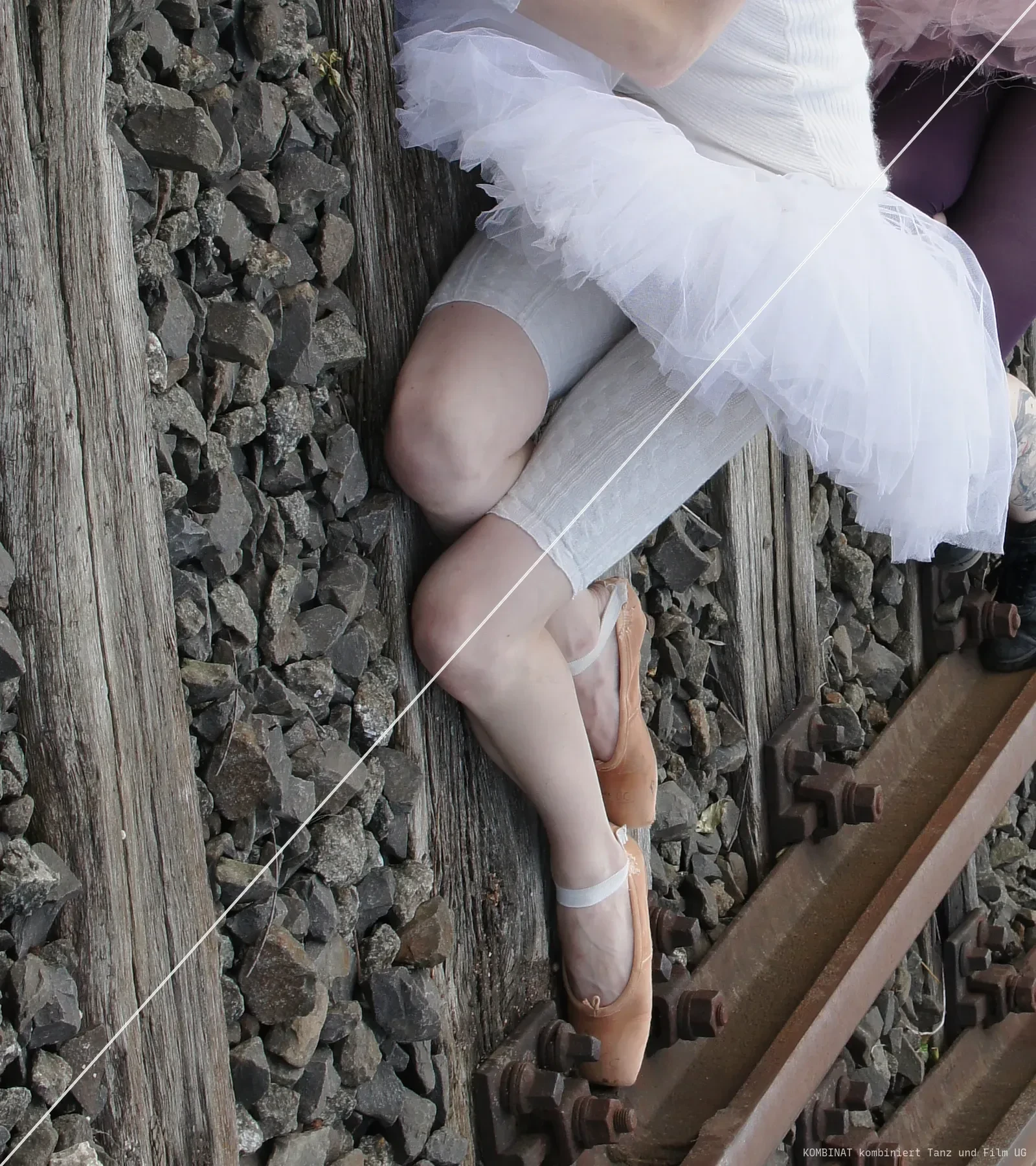
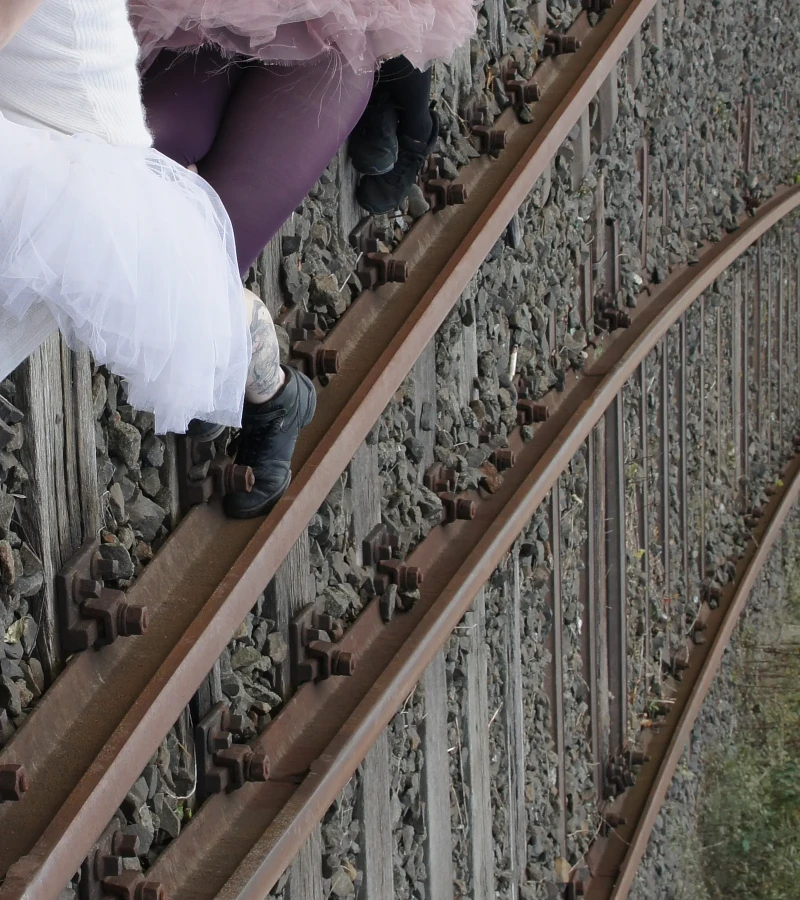
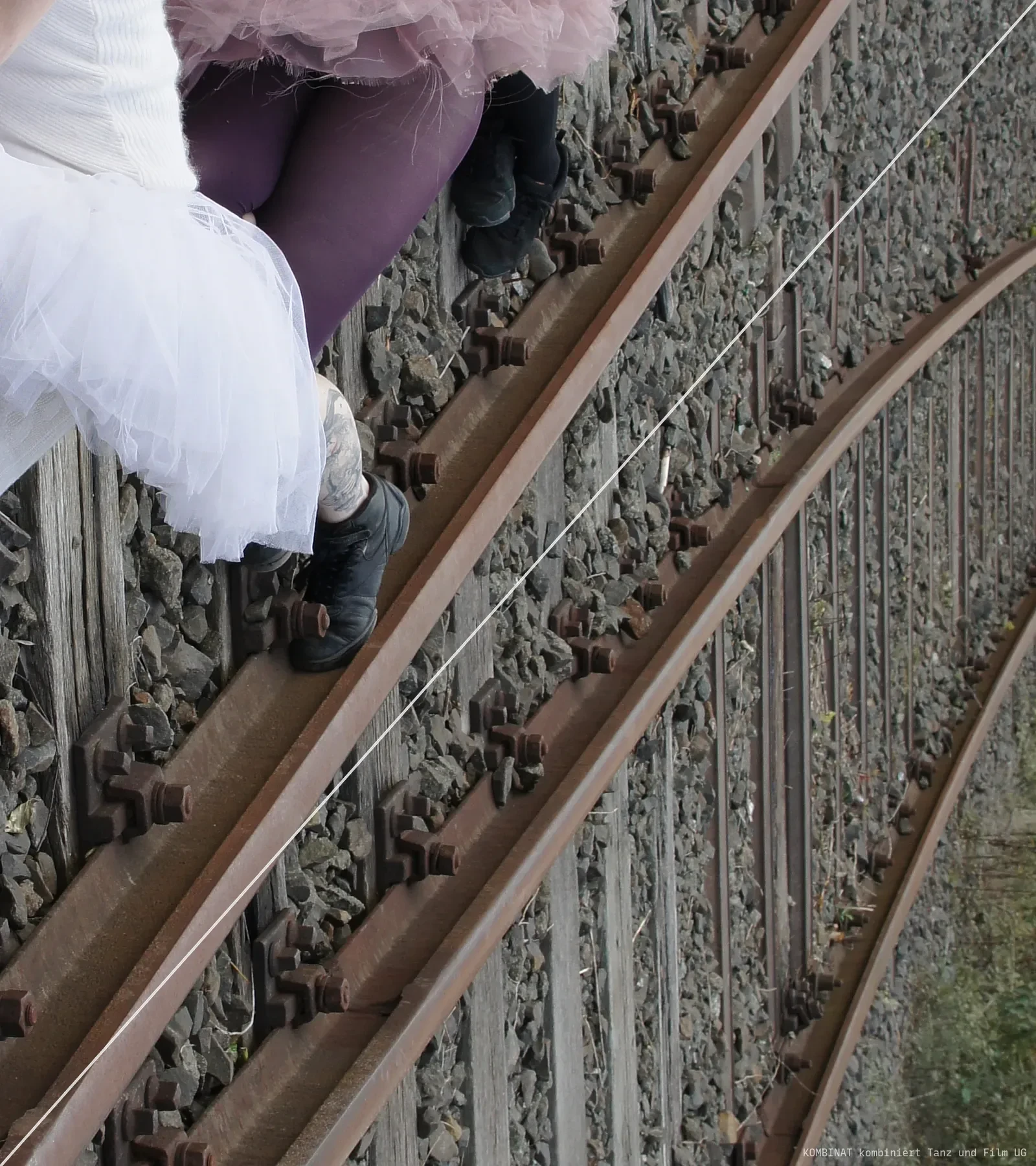
Three ballerinas in pointe shoes and tutus, wearing red, green, and blue caps, are resting in the rail bed with one ear on the track. Two of them have their eyes open, their expressions focused as if listening, while the one in the red cap appears to be sleeping. The image is rotated so the women appear upright. The tracks are rusty, and the track bed is rocky grey. The three figures fill the frame.
Plausible association
In the gravel bed between rusty tracks lie three women. They wear dance garments, pointe shoes, a tutu, and simple yet idiosyncratic caps in green, blue, and red They place their right ear on the rail. Their gaze suggests intense, concentrated listening. An age-old technique of forewarning: with one’s ear to the rail, one hears what is coming sooner. Sound travels further in solid materials. The route of transport becomes a signal pathway. This old trick also illustrates how useful it can be to apply technology against its original purpose. Repurposing as a technique of creativity. Corresponding Themes and Contexts - Cultural history of technology - Signal pathways, signal processing - Creative misappropriation with practical benefits - Prognostic technologies - Techniques of foresight - Concern for the future - Inevitability of what is to come - Displacement
Artistic intention
It is no coincidence that dancers are the ones lying here. Dancers are regularly in direct contact with the ground. They have developed a heightened sensitivity to the floor as a partner in movement. A ground that not only supports them but, as a sprung dance floor, gives slightly and assists their footwork. They perceive not only every irregularity but also the care of the place, its cleanliness, its freedom for movement. Their continual bodily contact with the world suggests that they might be listening into the distance through the ground. While the civilisational comforts of footwear, clothing, seating and vehicles cushion and conceal our direct contact with the ground, it is precisely the art that is perceived as light and weightless that is most intensely connected to its immediate environment. Perhaps in the reading of dance – as in so many cultural habits – there lies a form of cognitive dissonance.
Keywords

Original artistic project
Fluchtversprechen Nr 4 (2011)